
October 2 2026

EVERYTHING ABOUT XR, SMART & AI GLASSES, AR, VR AND THE METAVERSE SINCE 2021
Good Mood in the XR Industry
Meta’s new „VR glasses“, Snap’s launch of the Specs, and a flood of „AI glasses“. If it weren’t for the closure of some of the most notable VR game studios, you might think everything is just fine.
And perhaps it is.
This week, on a panel at the XR Fachtage in Stuttgart, I was asked what it would take for XR to finally go mainstream. My answer: we don’t need the mainstream to be successful and meaningful.
Still, some in the industry believe we are moving closer to it. Consider Meta launching a 100-gram headset that plays with form-factor concepts, or Snap introducing its first consumer AR glasses, impressing audiences with its display quality and variety of use cases.
Reading this year’s coverage of Connect and Snap’s Specs event, it is hard to miss: there is genuine optimism and good spirits in the air.
Even the slightly bumpy launch of the Steam Frame is seen as a net positive for the market. Valve is earning respect simply by charting its own course and staying unbothered.
Everybody who did not yet officially try the new Pico headset and would never talk about it openly would never tell you that this is actually a great headset.
So the industry – thats except some Apple Vision Bros and VR purists – likes the new hardware. Will consumers like them too? And what about the software? Numbers will tell!
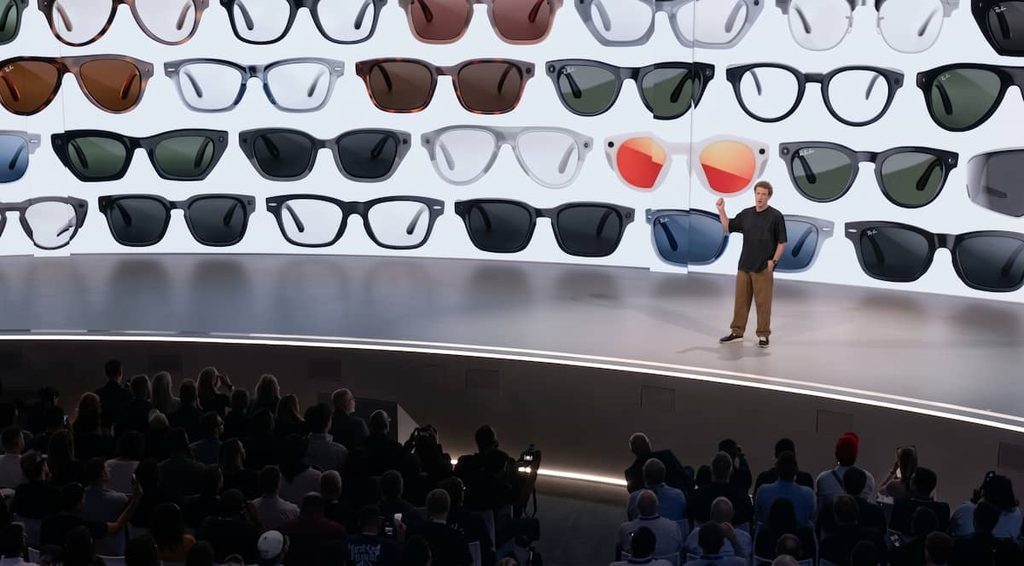
Meta Connect
Is Meta serious about confidential VMs for Muse?
Is Charm targeted at kids?
Are Meta VR Glasses the best VR glasses yet?
Thomas Bedenk and Thomas Riedel are talking Connect on this special episode of Spatial Realities.
Listen to the latest Episode of Spatial Realities here:

Listen now via: Blog | Apple Podcasts | Spotify | YouTube
PARTNER OF THIS NEWSLETTER – ADVERTISMENT

While today is all about the latest hardware announcements, the real question remains: What worlds are we actually building with these tools?
From November 10th to 12th, IMMERSIVE X 2026 brings together the global XR community to explore exactly that—and the full program is officially live.
Here is a quick glimpse of what is waiting for you:
- Philip Rosedale, creator of Second Life, discussing the next frontier of shared virtual spaces.
- Cortney Harding, author of The Spatial Race, opening the festival with her keynote on The State of the Metaverse in 2027.
- And Shane Harris, founder of SideQuest, hosting a fireside chat right at the iconic virtual campfire of AltspaceVR.
With over 70 sessions, 100 speakers, and 10 thematic tracks, the festival takes place entirely in immersive virtual worlds. You can join from the comfort of your home or office—best experienced in VR, but no headset is required for most sessions.
Free registration is open now. Secure your spot at immersive-x.de.
Meta
Above I wrote enthusiastically: The industry likes the new headset, which is a VR headset that’s called glasses, because it is so light and it can be worn like glasses. That’s of course a bit more complicated.
There are also the Apple Vision Pro Bros and the VR purists. The AVP Bros feel atacked, which can be puzzling. Why should you be attacked by something which doesn’t change what you love? If this would be a newsletter about psychology I would probably talk about the endowment effect, the status quo bias, psychological reactance or the zero-sum bias. Whatever it is: It is a them problem.
This is why I do not care about the sentence either:
Bloomberg: The Meta VR Glasses is what the Apple Vision Pro should have been.
Same goes for the VR purists. If it is not a real, or realy good VR headset for immersion, and you do not like such headsets, it is a you problem. Because this headset is not made for you and you got the point why you shouldn’t buy it, because you would be unhappy. But leave us allone with your you-problem, please 🙂
What I find interesting to ask is this: How much (more) people will be attrackted by this kind of headset?
The assumption would be this: The more we get into headsets which are not that immersive but easy to put on and enjoy movies, work or communicate, the higher is the chance they might get themselfes a full immersive headset. Is that a fair assumption?
Because the same I would say about XR glasses per se. If you ask yourself why Meta is doing the AI glassses at all, there are two answers: Because it is the beginning to a path to the more immersive headsets. Second: They are productizing Meta Muse, their first bigger hit the didn’t just buy or copy. (And the third reason is: data collection.)
Muse is now not only available as an app which is continously in the Top 10 of the US app charts. But also on their glasses. And it has it’s own hardware entity: Meta Muse Charm, a crossover of an ugly Nokia phone and a Tamagochi. Why do we need to talk about it? It is Spatial Computing.
What is Spatial Computing again? Before Spatial Computing humans learned how the (every now and then changing) computer interfaces worked. Now computer learn how to interprete human behaviour (which is behaving spatialy).
Gadgets like Muse Charm, wearables like the new audio glasses by Meta or Alexa and Google Home Mini are actually spatial computer, and that’s why we have to talk about here. Maybe more about that when we learned more about Charm. Because for now we just know that they exist.
UploadVR: Every New Game & Update Announced For Meta VR Glasses
heise.de: Meta VR Glasses ausprobiert: Was kann die ultraleichte VR-Brille?
faz.de: Warum Metas KI-Agent so erfolgreich ist
Next Events in XR
Check out our XR calendar to learn about the next events in XR!
- October 07 – next.app devcon
- October 12+13 – VR Summit
- November 3 – EuroXR
- November 16 – nextReality.festival 2026
- Decembre 7-9 – UnitedXR Europe
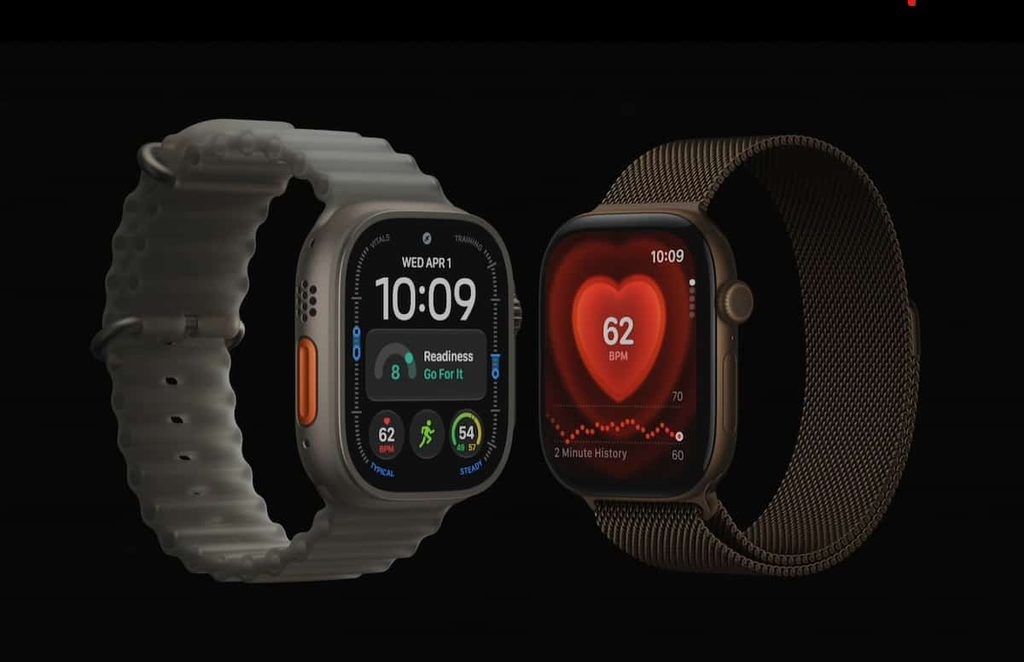
Apple
What Apple is doing with the Apple Watch has become fairly obvious to most people in the XR industry by now. While we are all anticipating another hardware release (right after the Duo) in the form of smart glasses, Apple isn’t rushing out a dedicated pair packed with AI features just to provoke backlash and risk having a new form factor banned or rejected. Instead, they are using an established wearable—the Apple Watch—as a testbed for new features and a proving ground for how they handle privacy.
It is a clever move.
We were recently introduced to a batch of new audio features for the Apple Watch that could just as easily belong on smart glasses: Siri Recap, Live Rewind, music recognition, and sound recognition. The latter, in particular, is something rarely seen in consumer hardware and may well set a precedent for competing devices.
Will this strategy pay off? For the majority of Apple users, yes. Most consumers simply don’t spend much time worrying about background data collection. While Apple has long marketed privacy as a core selling point, losing a handful of privacy-conscious purists to other ecosystems won’t move the needle for them.
I have seen several posts on Mastodon along the lines of: „That’s it, Apple. I’m out.“
These voices represent a vocal minority. But do they have a point?
From a pure pro-tech, pro-XR standpoint, you might say no: Apple eventually needs to deliver functional spatial computing features and leverage user data to train competitive models—especially with Google already so far ahead.
Taking a broader perspective, however, reveals a valid concern: the density of sensors, data pipelines, and continuous tracking around us is already massive. Asking whether these incremental features genuinely improve our daily lives is a legitimate question. The ideal scenario would be delivering contextual intelligence without expanding data harvesting—though that may be too idealistic for today’s market realities.
For now, the stage is set. Once Apple finally introduces its own smart glasses, we will see whether this groundwork actually paid off.
FastCompany: New Apple Watch AI features hint at how Apple plans to address privacy concerns in future smart glasses
MacRumors: Apple Explains What Happens to Conversations Siri Recap Hears
TechCrunch: Apple Watch’s new feature listens to your chats and recaps them
To finish this newsletter of, here a link to an article which summarizes my talk about AI Glasses at an event in Munich, Germany. Unfortunately Oktoberfest was not yet open, but I still had a great time 🙂
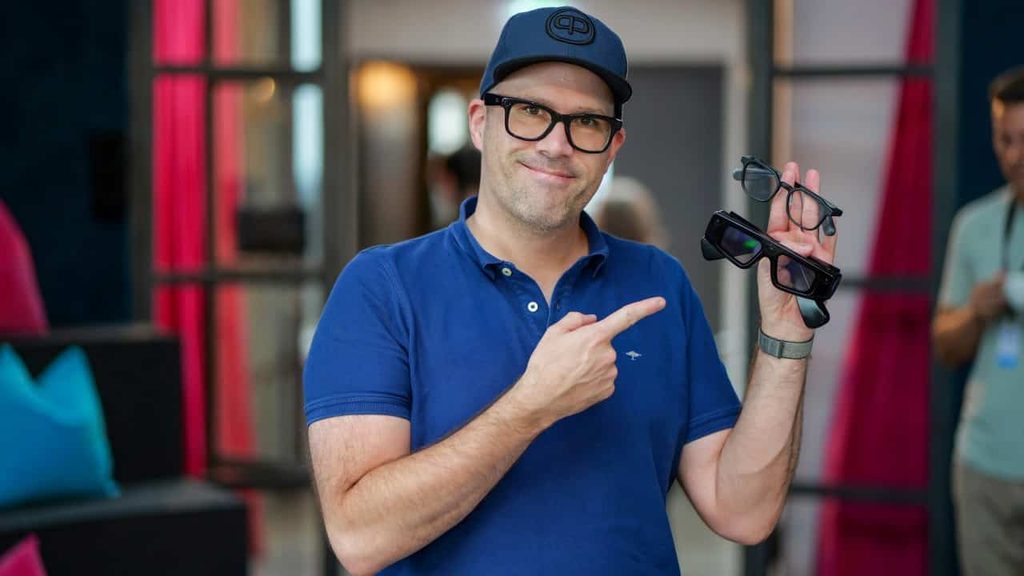
LinkedIn: „Zukunftsaneignung“: Warum ein Tech-Journalist beim eXpeRt Dialogue vor der Meta-Erzählung warnt
The same day I was at the XR meetup in munich about immersive Video. Check out the gallery:

And that’s it for today!
Thank you for reading and please consider forwarding the newsletter to collegues. Much appreciated!
Best wishes and stay democratic,
Thomas
(Host Spatial Realities)
PS Join Discord→ if you wanna discuss things with us or just be around your peers.
Schreibe einen Kommentar