


Is Meta serious about confidential VMs for Muse?
Is Charm targeted at kids?
Are Meta VR Glasses the best VR glasses yet?
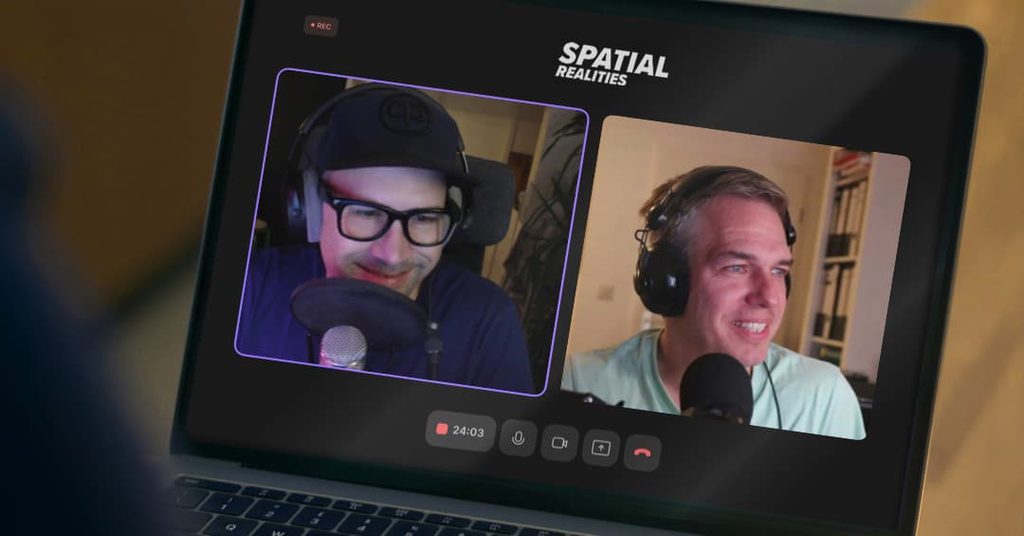
In this episode Thomas and Thomas are discussing Meta Connect revelations of 2026!
Five years after the metaverse hype, we find ourselves in an era defined by smart glasses and compute pucks. That is the central takeaway from this Meta Connect special of Spatial Realities, where Thomas Bedenk and I sat down right after the keynote to analyze Meta’s latest announcements and what they mean for the XR landscape.
The clear centerpiece of Meta’s strategy is AI, spearheaded by Meta Muse—an autonomous agent running in private virtual machines designed to plan, purchase, and manage everyday digital life. Alongside Muse came an unexpected hardware companion: the Muse Charm. Shaped like a Tamagotchi with a display, camera, and 5G connectivity, it strips the assistant down into a standalone, approachable physical token. But while it feels accessible, it also raises immediate questions about target audiences, privacy boundaries, and how comfortable we truly are handing over our digital routines to an AI ecosystem.
On the glasses front, Meta expanded its hardware lineup across multiple tiers. Most notable is the move into pure audio glasses without cameras, trading optical data capture for privacy-conscious users, lighter weight, and extended battery life. Meanwhile, the flagship Ray-Ban Meta line received a Gen 3 upgrade featuring slimmer frames, improved battery life, six microphones, and Dolby Atmos spatial audio capture, accompanied by new frame styles and software-driven hearing corrections.
The most discussed hardware of the night, however, was the new Meta VR glasses. Positioned with the tri-part marketing pitch „cinema, computer, console,“ the device weighs roughly 100 grams on the face by offloading its processing and battery into a wired pocket puck. With micro-OLED displays running at 120 Hz, downward-facing cameras for hand tracking, and integrated eye tracking, Meta aims to deliver a high-clarity spatial viewer rather than an ultra-wide FOV headset. It serves as a spiritual successor to the Quest Pro line, sacrificing peripheral immersion for portability, high PPD sharpness, and lighter wear.
At $1,299, the VR glasses mark a distinct shift toward portable media consumption and lightweight computing. Yet, as we examine in our discussion, Meta’s recurring bottleneck remains unchanged: while hardware form factors are shrinking into practical devices, the ecosystem still lacks dedicated, mature productivity software to turn spatial computing into an indispensable everyday tool.
PARTNER OF THE EPISODE: IMMERSIVE X

Shownotes
- PARTNER: IMMERSIVE X
- IMMERSIVE X 2026 – THE GLOBAL XR FESTIVAL IN VR
- Meta Connect 2026
-
 Meta Connect 2026: Opening Keynote
-
Meta Connect 2026: Everything Revealed in 16 Minutes
- My point of view about the Meta Connect 2026 keynote – The Ghost Howls
- YouTube | Joanna Stern: I Asked Mark Zuckerberg Why We Should Trust Meta
- UploadVR: Meta VR Glasses Officially Announced, Shipping Spring 2027 For $1300
- Inc. – Meta’s New Muse AI Agent Read My Private Messages. I Never Asked It To
Schreibe einen Kommentar