EVERYTHING ABOUT XR, SMART & AI GLASSES, AR, VR AND THE METAVERSE SINCE 2021
Good Mood in the XR Industry
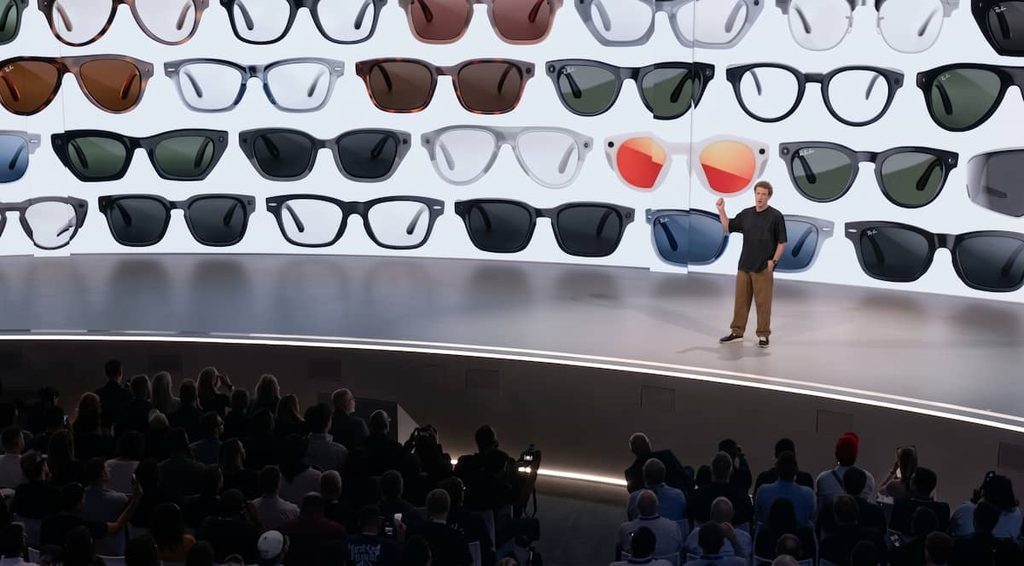
Meta’s new „VR glasses“, Snap’s launch of the Specs, and a flood of „AI glasses“. If it weren’t for the closure of some of the most notable VR game studios, you might think everything is just fine.
And perhaps it is.
This week, on a panel at the XR Fachtage in Stuttgart, I was asked what it would take for XR to finally go mainstream. My answer: we don’t need the mainstream to be successful and meaningful.
Still, some in the industry believe we are moving closer to it. Consider Meta launching a 100-gram headset that plays with form-factor concepts, or Snap introducing its first consumer AR glasses, impressing audiences with its display quality and variety of use cases.
Reading this year’s coverage of Connect and Snap’s Specs event, it is hard to miss: there is genuine optimism and good spirits in the air.
Even the slightly bumpy launch of the Steam Frame is seen as a net positive for the market. Valve is earning respect simply by charting its own course and staying unbothered.
Everybody who did not yet officially try the new Pico headset and would never talk about it openly would never tell you that this is actually a great headset.
So the industry – thats except some Apple Vision Bros and VR purists – likes the new hardware. Will consumers like them too? And what about the software? Numbers will tell!
Meta Connect
Is Meta serious about confidential VMs for Muse? Is Charm targeted at kids? Are Meta VR Glasses the best VR glasses yet?
Thomas Bedenk and Thomas Riedel are talking Connect on this special episode of Spatial Realities.
Listen to the latest Episode of Spatial Realities here:
While today is all about the latest hardware announcements, the real question remains: What worlds are we actually building with these tools?
From November 10th to 12th, IMMERSIVE X 2026 brings together the global XR community to explore exactly that—and the full program is officially live.
Here is a quick glimpse of what is waiting for you:
Philip Rosedale, creator of Second Life, discussing the next frontier of shared virtual spaces.
Cortney Harding, author of The Spatial Race, opening the festival with her keynote on The State of the Metaverse in 2027.
And Shane Harris, founder of SideQuest, hosting a fireside chat right at the iconic virtual campfire of AltspaceVR.
With over 70 sessions, 100 speakers, and 10 thematic tracks, the festival takes place entirely in immersive virtual worlds. You can join from the comfort of your home or office—best experienced in VR, but no headset is required for most sessions.
Free registration is open now. Secure your spot at immersive-x.de.
Meta
Above I wrote enthusiastically: The industry likes the new headset, which is a VR headset that’s called glasses, because it is so light and it can be worn like glasses. That’s of course a bit more complicated.
There are also the Apple Vision Pro Bros and the VR purists. The AVP Bros feel atacked, which can be puzzling. Why should you be attacked by something which doesn’t change what you love? If this would be a newsletter about psychology I would probably talk about the endowment effect, the status quo bias, psychological reactance or the zero-sum bias. Whatever it is: It is a them problem.
This is why I do not care about the sentence either:
Same goes for the VR purists. If it is not a real, or realy good VR headset for immersion, and you do not like such headsets, it is a you problem. Because this headset is not made for you and you got the point why you shouldn’t buy it, because you would be unhappy. But leave us allone with your you-problem, please 🙂
What I find interesting to ask is this: How much (more) people will be attrackted by this kind of headset?
The assumption would be this: The more we get into headsets which are not that immersive but easy to put on and enjoy movies, work or communicate, the higher is the chance they might get themselfes a full immersive headset. Is that a fair assumption?
Because the same I would say about XR glasses per se. If you ask yourself why Meta is doing the AI glassses at all, there are two answers: Because it is the beginning to a path to the more immersive headsets. Second: They are productizing Meta Muse, their first bigger hit the didn’t just buy or copy. (And the third reason is: data collection.)
Muse is now not only available as an app which is continously in the Top 10 of the US app charts. But also on their glasses. And it has it’s own hardware entity: Meta Muse Charm, a crossover of an ugly Nokia phone and a Tamagochi. Why do we need to talk about it? It is Spatial Computing.
What is Spatial Computing again? Before Spatial Computing humans learned how the (every now and then changing) computer interfaces worked. Now computer learn how to interprete human behaviour (which is behaving spatialy).
Gadgets like Muse Charm, wearables like the new audio glasses by Meta or Alexa and Google Home Mini are actually spatial computer, and that’s why we have to talk about here. Maybe more about that when we learned more about Charm. Because for now we just know that they exist.
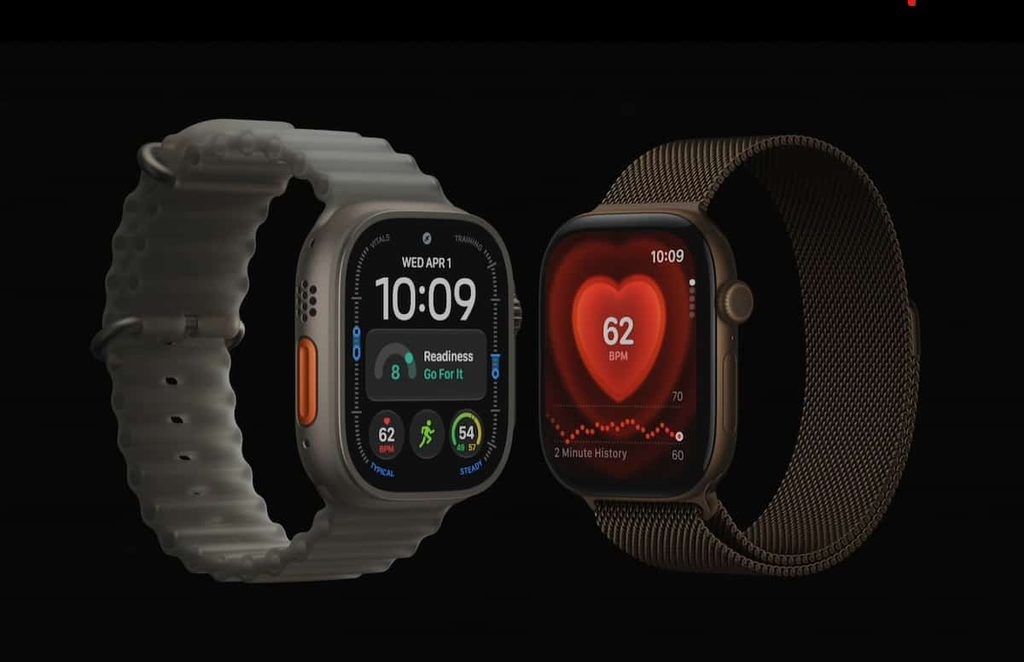
What Apple is doing with the Apple Watch has become fairly obvious to most people in the XR industry by now. While we are all anticipating another hardware release (right after the Duo) in the form of smart glasses, Apple isn’t rushing out a dedicated pair packed with AI features just to provoke backlash and risk having a new form factor banned or rejected. Instead, they are using an established wearable—the Apple Watch—as a testbed for new features and a proving ground for how they handle privacy.
It is a clever move.
We were recently introduced to a batch of new audio features for the Apple Watch that could just as easily belong on smart glasses: Siri Recap, Live Rewind, music recognition, and sound recognition. The latter, in particular, is something rarely seen in consumer hardware and may well set a precedent for competing devices.
Will this strategy pay off? For the majority of Apple users, yes. Most consumers simply don’t spend much time worrying about background data collection. While Apple has long marketed privacy as a core selling point, losing a handful of privacy-conscious purists to other ecosystems won’t move the needle for them.
I have seen several posts on Mastodon along the lines of: „That’s it, Apple. I’m out.“
These voices represent a vocal minority. But do they have a point?
From a pure pro-tech, pro-XR standpoint, you might say no: Apple eventually needs to deliver functional spatial computing features and leverage user data to train competitive models—especially with Google already so far ahead.
Taking a broader perspective, however, reveals a valid concern: the density of sensors, data pipelines, and continuous tracking around us is already massive. Asking whether these incremental features genuinely improve our daily lives is a legitimate question. The ideal scenario would be delivering contextual intelligence without expanding data harvesting—though that may be too idealistic for today’s market realities.
For now, the stage is set. Once Apple finally introduces its own smart glasses, we will see whether this groundwork actually paid off.
To finish this newsletter of, here a link to an article which summarizes my talk about AI Glasses at an event in Munich, Germany. Unfortunately Oktoberfest was not yet open, but I still had a great time 🙂
EVERYTHING ABOUT XR, SMART & AI GLASSES, AR, VR AND THE METAVERSE SINCE 2021
One event hunts the other – there is much to do these days! Check out the new episode with event recaps, AI Glasses news free tickets for XR developers!
Where will the developer base for mass-market XR originate? In this episode NextApp CEO Greg Fawson traces the event’s journey from Berlin’s 2009 Android meetups to a cross-platform summit, arguing that mainstream mobile engineers hold the real key to scaling spatial software. Previewing the upcoming three-day conference, the discussion covers dedicated tracks for XR, mobile gaming, and agentic AI coding, emphasizing the need for open community exchange to solve shared platform bottlenecks.
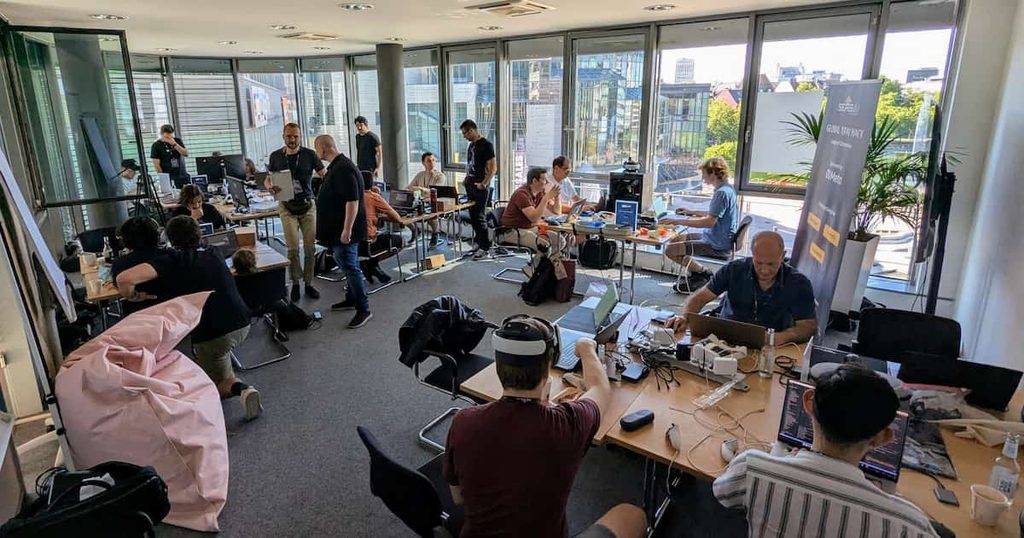
We also speak about IFA and the AI Hackathon in Cologne from last weekend.
In the News:
HTC VIVE Eagle launch in USA, Europe and Australian markets
Metas Muse and if we will see a smart glasses integration at connect
Apples iPhone-Event (September 9): AirPods with cameras!
In this Email you also get all the information you need for a successful participation. So read this email 🙂
Single Source of Truth
You find all the latest information, like the most up to date schedule in Hackbase. Hackbase is like a Wiki or Discord, where you can find all information concerning the hackathon, as well as build your teams and communicate with hackers, mentors, track curators (like me) and organizers.
It is mandatory that you sign up there (but at least one of your team). the communication via the hackathon will take place there.
Thank you! Please take your time and click through Hackbase, read through the provided information and make sure all your questions are being answered BEFORE the hackathon.
Why? Because than you can ask questions and start faster and be more successfull at the hackathon.
Important for you as part of the AI Glasses track
AI Glasses Workshop with Snap Ambassadors Friday, 2.30pm in Room Barcelona Join this workshop to learn the basics of the device from the two Snap mentors Ines and Andrew. If you join early I can already give out a device to you.
Deep Dive with Snap Ambassadors Saturday, somewhat between 10am and 2pm. Good place to ask the hard questions.
Device Management
One thing you will not find in Hackbase is how you get access to one of the 10 Snap Spectacles.
As you can read this you have a priority access to a device. So you are already on the list. The bigger the team the higher you are on that list.
Solo teams only get a device when there is one left. Why do we do it that way? Teams are better and more probable to be successful.
To get a device you have to trade in an up-to-date passport document and sign that you received the device. You will get back the passport when you give back the device.
You can give back the device any time when I am at Startplatz. You have to give it back latest at Sunday until 5pm.
On Sunday the three jury members Christian, Selin and Christoph might want to see what you build, so keep that in mind.
If you want to pitch you have the chance to do that on Sunday at 2pm. You should do that if you want to be a winner 🙂
If you dont join the workshop I can give you a device after the kick-off at Startplatz.
That’s it for now!
If you have questions or the Hackbase signup is not working, you can always email me info@spatialrealities.de, write me on LinkedIn or Discord.
Can’t wait meeting you on Friday!
Best,
Thomas
Curator, „The Contextual AI Challenge“ Host Spatial Realities
PS If you want to get a glimpse in how hacking with the Snap Spectacles might work, check out the video I made where I hacked a lense in two hours: Instagram →
EVERYTHING ABOUT XR, SMART & AI GLASSES, AR, VR AND THE METAVERSE SINCE 2021
As it is gamescom week, just a quick heads-up for the newest episode. And don’t forget the hackathon on September 4-6! ♥️
What do you do when you meet someone at a hackathon you work really well with? You start a company! After teaming up at a London hackathon, Ines Hilz and Andrew Douglas founded Sunflower VR and developed the AI AR-mirror Aeva Display. In this interview, they share insights into developing with Snap’s AI-powered Lens Studio and advise hackathon participants to test frequently on-device to master the holographic display’s typography, colors, and transparency.
In the News:
The Headset-Price Guess game! Featuring: Pico Space Pro, Steam Frame, Project Phoenix, Meta Ray-Ban Display 2
EVERYTHING ABOUT XR, SMART & AI GLASSES, AR, VR AND THE METAVERSE SINCE 2021
Today a shorter Newsletter. In it: the new podcast episode with AI Glasses developer Christoph Spinger. And an event invitation if you are at gamescom!
How do you develop for AI Glasses? Of course you would use AI for that. But how exactly? And what do you have to consider when your AI suddenly has eyes and ears?
I sat together with Christoph Spinger to learn from his experience. Christoph is one of the nost active and fun XR develops right now, winning almost every hackathon he joins. He also won the nextReality.Contest (apply now!) as often as nobody else yet in it’s 10 year history.
We also talked about the latest news:
EssilorLuxotticas numbers show exponential growth of Smart Glasses, contrary to the mood of social media, and even the German Data Privacy Comissioner who thinks about banning AI Glasses
Samsungs Unwrapped event which showed us again what you can not buy. Christoph is a bit disappointed, because no displays are involved.
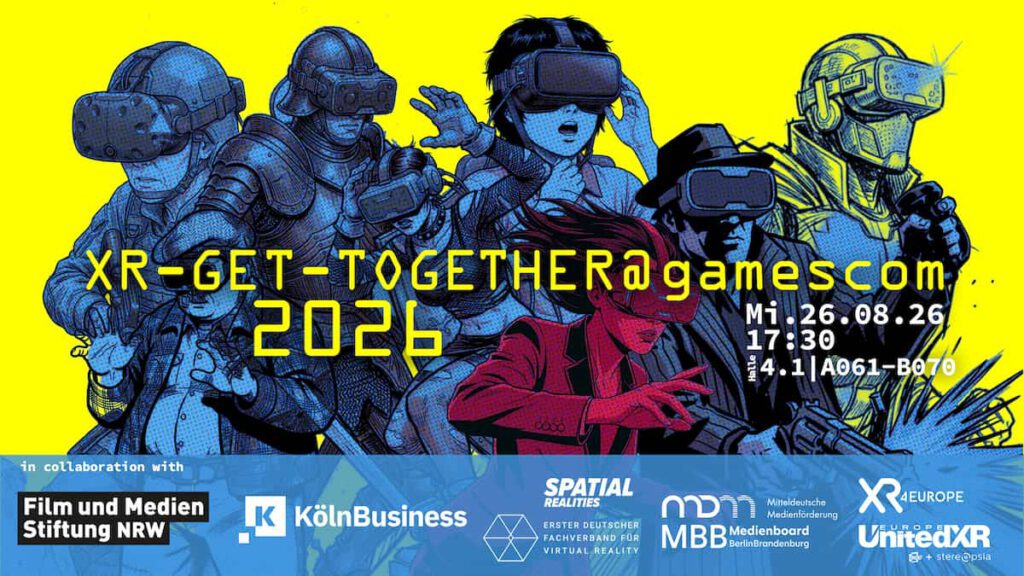
Like last year, we are thrilled to invite you to our annual XR Get-Together at Gamescom!
In the midst of the hectic trade show hustle, step away from the crowded halls and cool down with a cold local Kölsch. Join us to unwind, network, and exchange ideas with peers, partners, and friends from the XR and interactive entertainment spaces before heading off to the evening parties. Whether you are deeply rooted in immersive tech or passionate about the future of interactive media and gaming, we would love to see you there!
Thomas here, curator of the XR track „The Contextual AI Challenge“ (→) at our AI Hackathon, taking place September 4–6 at Startplatz, Cologne.
Thank you for applying for one of the 25 exclusive tickets to get access to a device you can hack with.
I am writing to confirm that you are in. Congratulations! 🙂
It’s great to have you with us, and the mentors, jury members and I can’t wait to see what your team will create.
We already know that thanks to our partner Snap, we will have 10 Snap Spectacles (2024) we will give out to the teams.
There is one last hurdle: grab your ticket.
While the hackathon ticket isn’t free, it comes packed with huge value – including full catering, mentor access, and top-tier tech – and directly helps us cover our track’s organization costs. Make sure to book befor the 25 tickets for this track are gone.